Once you have selected the perfect hair patch, the next critical decision is figuring out how to attach it to your head. The attachment method you choose dictates how secure the patch will feel, how often you will need maintenance, and whether you can participate in activities like swimming or intense sports.
The three most common methods of attaching a hair patch are medical-grade tape, liquid adhesive (glue), and snap clips. Let us break down the pros and cons of each method so you can find the perfect match for your lifestyle.
1. Liquid Adhesive (Glue) - "Hair Bonding"
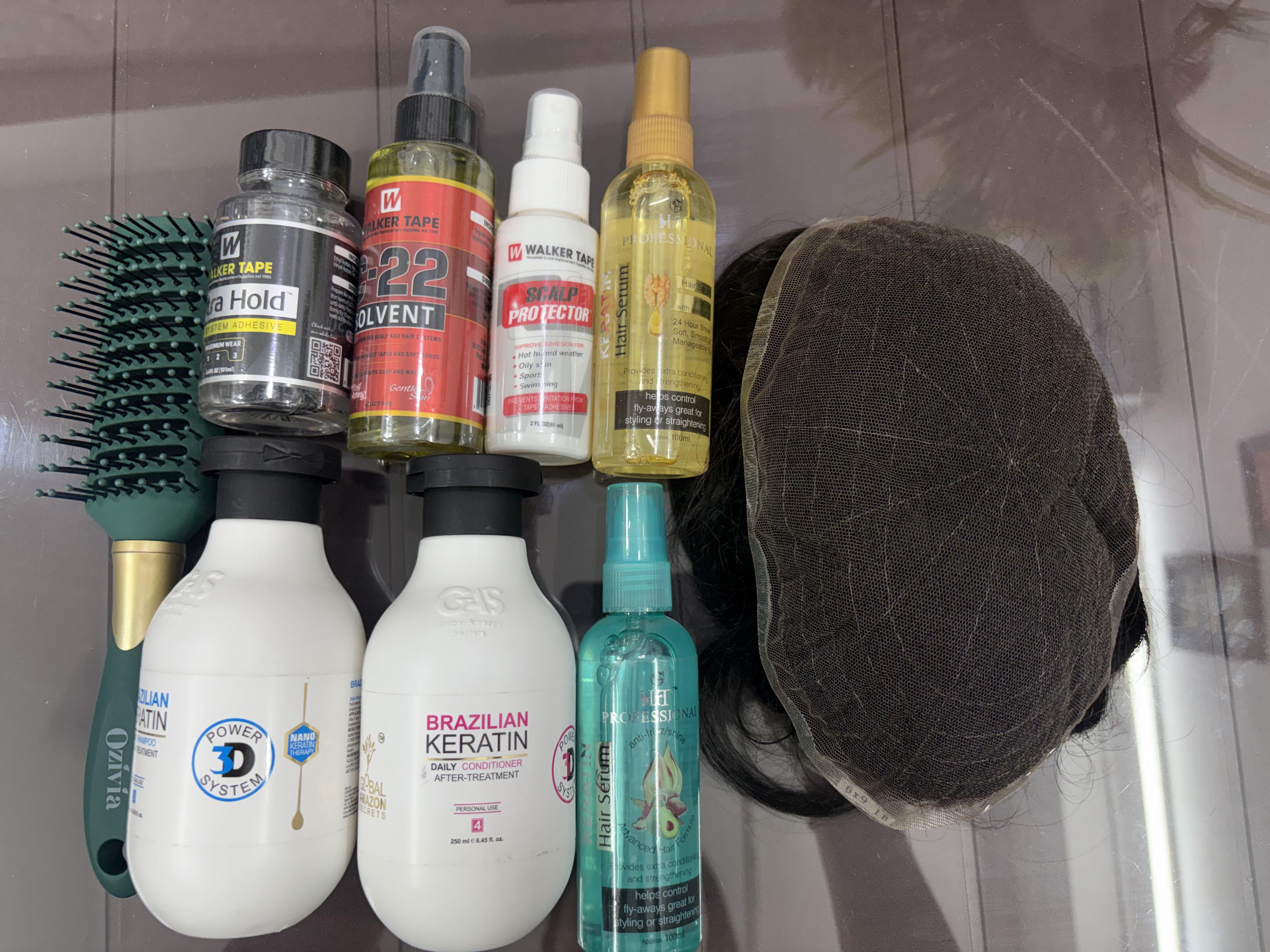
Liquid adhesive, commonly known as hair bonding glue (e.g., Ghost Bond or Walker Tape Ultra Hold), is a medical-grade acrylic or water-based liquid applied directly to the scalp and the base of the patch.
The Pros:
- The Strongest Hold: Once cured, liquid glue forms an incredibly strong, waterproof bond. You can swim, sleep, and exercise without any fear of the patch moving.
- Invisible Hairline: Glue is the only way to achieve a completely flush, invisible front hairline. When applied thinly under a Swiss Lace or Poly skin front, the edge of the patch disappears into your skin.
- Long-Lasting: A good glue bond can last anywhere from 3 to 5 weeks before requiring a touch-up or full re-bonding.
The Cons:
- Application is messy and requires a professional touch for a clean finish.
- It requires a strict cleaning regimen to remove glue residue during maintenance.
2. Double-Sided Tape
Hair system tape comes in rolls or pre-cut contours that match the shape of the patch. You apply the tape to the perimeter of the patch and press it onto your scalp.
The Pros:
- Easy to Use: Tape is much easier and cleaner to apply and remove than liquid glue. Many wearers who maintain their patches at home prefer tape.
- Breathability: Because you only apply tape to the outer edges of the patch (leaving the center open), your scalp can breathe much better compared to a full-head glue application.
- Fast Cleanup: Tape peels off relatively cleanly, meaning less scrubbing and chemical removers are needed during your maintenance routine.
The Cons:
- Tape can create a slight ridge or thickness at the front hairline, making it slightly more detectable than liquid glue if you comb your hair straight back.
- It typically does not last as long as glue (usually 2 to 3 weeks).
3. Snap Clips
If you have enough natural hair remaining on the sides and back, tiny metal snap clips can be sewn into the perimeter of the hair patch. You simply clip the patch into your existing hair.
The Pros:
- Zero Shaving Required: Unlike tape or glue, you do not need to shave the top of your head to use clips.
- Daily Removal: You can clip the patch on in the morning and take it off before bed, which feels much more hygienic and comfortable for some users.
- No Chemicals: Since no adhesives are used, there is absolutely zero risk of skin allergies or irritation.
The Cons:
- The clips tug on your natural hair, which can cause traction alopecia (further hair loss) over time.
- It is the least secure method. You cannot swim or play contact sports while wearing a clipped-on patch.
The Hybrid Approach (The Best of Both Worlds)
Many professional studios recommend a hybrid approach. This involves using double-sided tape around the back and sides of the patch for easy cleanup and breathability, and using liquid adhesive solely on the front hairline for that flawless, invisible look.